
The Core 5: Essential Exercises for Parkinson’s Safety
If you’re looking for safe, effective ways to support mobility, these are 5 clinically recommended exercises for Parkinson’s patients:
- Big Reach Movements – Improves movement amplitude and reduces stiffness caused by bradykinesia
- Tandem Standing (Heel-to-Toe Balance) – Enhances balance and helps reduce fall risk
- Seated Leg Extensions – Builds lower-body strength safely without overexertion
- Gentle Rotational Stretches – Improves flexibility and reduces rigidity
- Walking with Intent – Helps overcome shuffling gait and freezing episodes
These exercises for Parkinson’s focus on balance, strength, and controlled movement, all of which are essential for maintaining independence and preventing falls.
About the Author: Amy Romero is the Chief Marketing Officer at Alliance Homecare. With over 20 years of experience in healthcare and tech, she leads the RN Ambassador Program to ensure families receive expert-led education and support.
Clinically Reviewed by: Alliance Homecare Nursing Team
Introduction: Exercise as Medicine in Neurological Care
For individuals living with Parkinson’s disease, movement is not just about staying active—it functions as a form of daily therapy.
From a clinical perspective, regular physical activity helps:
- Maintain mobility
- Slow functional decline
- Improve coordination and confidence
However, many families hesitate when it comes to encouraging exercise.
“What if they fall?”
“Is it safe to push them to move more?”
These concerns are valid.
In practice, the goal is not simply movement—but safe, guided movement.
When done correctly, exercise becomes one of the most powerful non-pharmacological tools available. When done without proper awareness, it can increase fall risk.
This is why clinical oversight—especially from a registered nurse—plays such a critical role in Parkinson’s care.
5 Clinically-Backed Exercises for Balance and Strength
These exercises are commonly used in neurological care settings. Each includes not only how to perform the movement—but also the clinical cues and safety adjustments that make them effective.
1. The “Big” Reach (Targeting Bradykinesia)
Purpose: Counteracts small, slow movements by training the body to move with larger amplitude.
How to perform:
- Stand or sit upright
- Extend one arm forward and upward in an exaggerated motion
- Reach as far as comfortably possible
- Alternate sides in a slow, controlled rhythm
Clinical cues:
- “Reach bigger than feels natural”
- “Think wide and open, not small and tight”
Common mistakes:
- Moving too quickly
- Limiting range due to fear of instability
Safety tip:
Keep a stable surface nearby for support if balance feels uncertain.
2. Tandem Standing (Heel-to-Toe Balance)
Purpose: Improves balance and stability, reducing fall risk.
How to perform:
- Stand with one foot directly in front of the other (heel touching toe)
- Hold position for 10–20 seconds
- Switch sides
Clinical cues:
- Keep eyes forward (not down)
- Engage core muscles gently
Common mistakes:
- Looking down, which disrupts balance
- Holding breath
Safety tip:
Always perform near a wall, counter, or sturdy chair for immediate support.
3. Seated Leg Extensions
Purpose: Strengthens quadriceps to support walking and standing transitions.
How to perform:
- Sit upright in a chair
- Slowly extend one leg until straight
- Hold for 3–5 seconds
- Lower with control and repeat
Clinical cues:
- “Lift slowly, lower even slower”
- Maintain upright posture
Common mistakes:
- Leaning backward
- Dropping the leg too quickly
Safety tip:
Ideal for individuals with higher fall risk since it minimizes standing instability.
4. Gentle Rotational Stretches
Purpose: Reduces rigidity and improves trunk flexibility.
How to perform:
- Sit or stand upright
- Slowly rotate torso to one side
- Hold briefly, then return to center
- Repeat on the other side
Clinical cues:
- Keep movements slow and controlled
- Avoid forcing range of motion
Common mistakes:
- Jerky or rushed movements
- Over-rotating and causing discomfort
Safety tip:
Stop immediately if dizziness or discomfort occurs.
5. Walking with Intent (Overcoming Freezing of Gait)
Purpose: Improves walking pattern and reduces shuffling or freezing episodes.
How to perform:
- Walk in a straight line with deliberate steps
- Focus on lifting feet and swinging arms
- Use a steady rhythm (counting or cues if needed)
Clinical cues:
- “Big steps”
- “Heel first, then toe”
Common mistakes:
- Shuffling steps
- Hesitation leading to freezing
Safety tip:
If freezing occurs, pause, reset posture, and restart with a clear cue (e.g., counting or stepping over an imaginary line).
Clinical Safety: Managing Non-Motor Symptoms During Activity
Exercise in Parkinson’s is not just about muscles—it also involves monitoring the body’s internal responses.
From a clinical standpoint, we pay close attention to:
Heart Rate and Blood Pressure
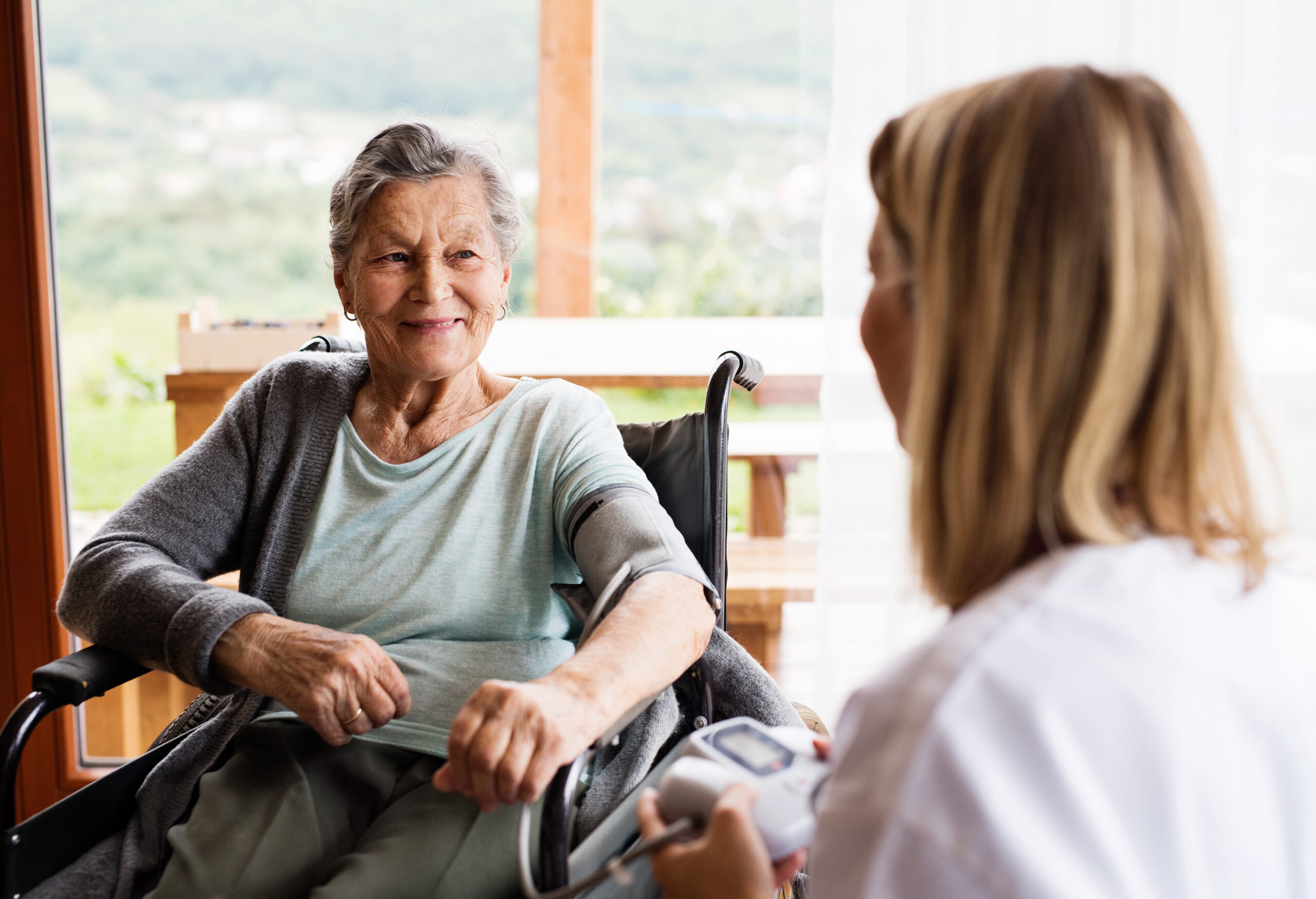
Some individuals experience orthostatic hypotension, leading to dizziness when standing.
What to watch for:
- Lightheadedness
- Sudden fatigue
- Unsteadiness
Shortness of Breath and Fatigue
Patients may report:
- Feeling breathless with mild activity
- Sudden energy drops
This can be related to:
- Medication timing
- Autonomic nervous system changes
A Clinical Insight
In many cases, it’s not the exercise itself that creates risk—it’s unnoticed physiological changes during activity.
This is where trained clinical observation becomes essential.
The Alliance Difference: The “Safe-Stride” In-Home Program
At Alliance Homecare, exercise is not treated as a generic routine—it is approached as clinical mobility training.
Our RN-led approach includes:
- Supervising balance exercises in real time
- Adjusting activity based on fatigue and response
- Identifying fall risks within the home environment
- Coordinating observations with the patient’s medical team
In practice, this means:
- A nurse may stand within arm’s reach during balance training
- Modify exercises based on subtle instability
- Intervene before a fall risk becomes an incident
Families often underestimate how quickly small mobility issues can escalate.
Our goal is to ensure that movement remains:
- Safe
- Structured
- Therapeutically effective
Conclusion: Regaining Independence, One Step at a Time
For individuals living with Parkinson’s, movement is more than exercise—it’s a key part of maintaining independence and preventing decline.
But without proper guidance, even simple exercises can carry risk.
The difference lies in how those movements are performed—and who is there to guide them.
With the right clinical support, daily activity becomes safer, more structured, and more effective.
To learn how a nurse-guided mobility plan can support your loved one at home, visit:
👉 Alliance Homecare
A supervised, personalized approach can help turn everyday movement into long-term progress and confidence.
Frequently Asked Questions (FAQ)
What are the best exercises for Parkinson’s patients?
The most effective exercises focus on balance, strength, and movement amplitude, such as big reach movements, balance training, and controlled walking.
Is walking enough exercise for Parkinson’s disease?
Walking is beneficial, but it should be combined with balance and strength exercises to reduce fall risk and improve overall mobility.
Are balance exercises safe for Parkinson’s patients?
Yes—when performed with proper support and supervision. Safety measures such as nearby support surfaces or clinical guidance are essential.
Why is exercise important in Parkinson’s disease?
Exercise helps maintain mobility, reduce stiffness, improve balance, and may slow functional decline over time.
Medical Disclaimer:
The information provided in this article is for general educational purposes only and is not a substitute for professional medical advice, diagnosis, or treatment. Reliance on any information provided on this website is solely at your own risk. Always consult with a qualified physician or healthcare provider regarding any medical concerns. If you are experiencing a medical emergency, please call 911 or go to the nearest emergency room immediately.