
Diane Sirakovsky
RN, BSN, PNHNP-BC
Founder, Chief Clinical Strategist
I’ve spent a lot of my career in hospital hallways, talking to families at one of the most stressful crossroads they’ll ever face. The doctor says your loved one is ready for discharge after a stroke, but they aren’t “back to themselves” yet. Suddenly, you’re handed a stack of brochures for rehab facilities.
It feels like the safe choice, right? But as a nurse, I’ve seen that for many people, a clinical facility isn’t actually the best place for a brain to heal. The immediate anxiety of “how will we handle this at home?” is real, but when you have the right chronic disease management support, the home environment usually wins on every metric—from safety to actual recovery speed.
The Critical Decision: Home vs. Facility
The first few months of the stroke recovery timeline are what we call the “golden window.” This is when neuroplasticity—the brain’s ability to rewire itself—is at its peak. In a facility, life is dictated by shifts, schedules, and roommates. At home, the environment is familiar, which lowers cortisol and lets the brain focus entirely on getting better.
The Safety Factor: Continuous Monitoring
The Reality of 24-Hour Care at Home
I always tell families to look at the “nurse-to-patient ratio.” In even the most high-end facilities, one nurse might be responsible for a dozen patients. If your mom or dad needs help in the middle of the night, they’re pushing a call bell and waiting.
With 24-hour home care, that ratio is 1-on-1. There is no waiting. Whether it’s managing a complex medication schedule or spotting the tiny, subtle signs of a secondary stroke, having a professional right there provides a level of safety that an institutional setting just can’t match.
Infection Control & Risk Reduction
Let’s be honest: facilities are breeding grounds for germs. Post-stroke patients often have weakened immune systems. By choosing 24-hour in-home care, you aren’t just getting convenience; you’re keeping your loved one out of a communal environment where the risk of pneumonia or UTIs is much higher.
Accelerating Recovery: Personalized Attention
How to Recover From Stroke Quickly via 1-on-1 Care
People often ask me how to speed things up. The answer isn’t a secret therapy; it’s consistency. In a facility, a patient might get 45 minutes of physical therapy and then spend the next six hours sitting in a chair.
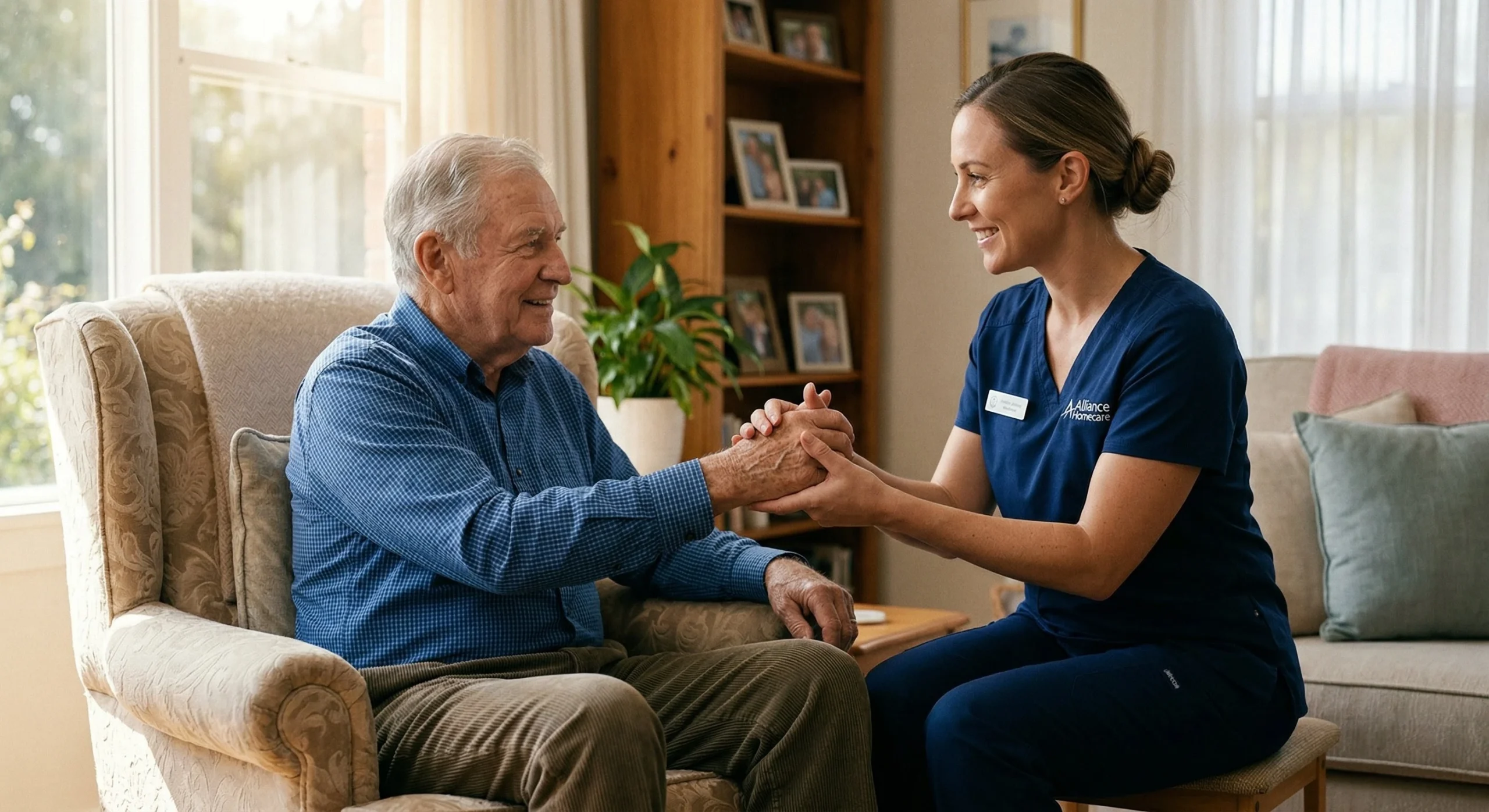
At home, our home health aides and nurses turn every interaction into a recovery moment. We practice grip strength while holding a utensil or work on speech during a normal conversation. It’s this steady, all-day engagement that moves the needle on the stroke recovery timeline.
Supporting Your Rehab Goals
One of the most overlooked parts of recovery is sleep. It is nearly impossible to get deep, restorative sleep in a noisy facility with beeping monitors. A quiet home, a familiar bed, and a nurse who knows exactly how to position a patient for comfort make a massive difference in how the brain repairs itself overnight.
Medical Capability: Bringing the Hospital Home
Managing Complex Medical Needs
There’s a common worry that “home care” isn’t “medical enough.” But that’s where private duty nursing comes in. We aren’t just there for companionship.
Our Registered Nurses handle the heavy-duty clinical work:
- Managing G-tubes and specialized feeding.
- Administering injections and complex medication cocktails.
- Monitoring vitals to catch issues before they become emergencies.
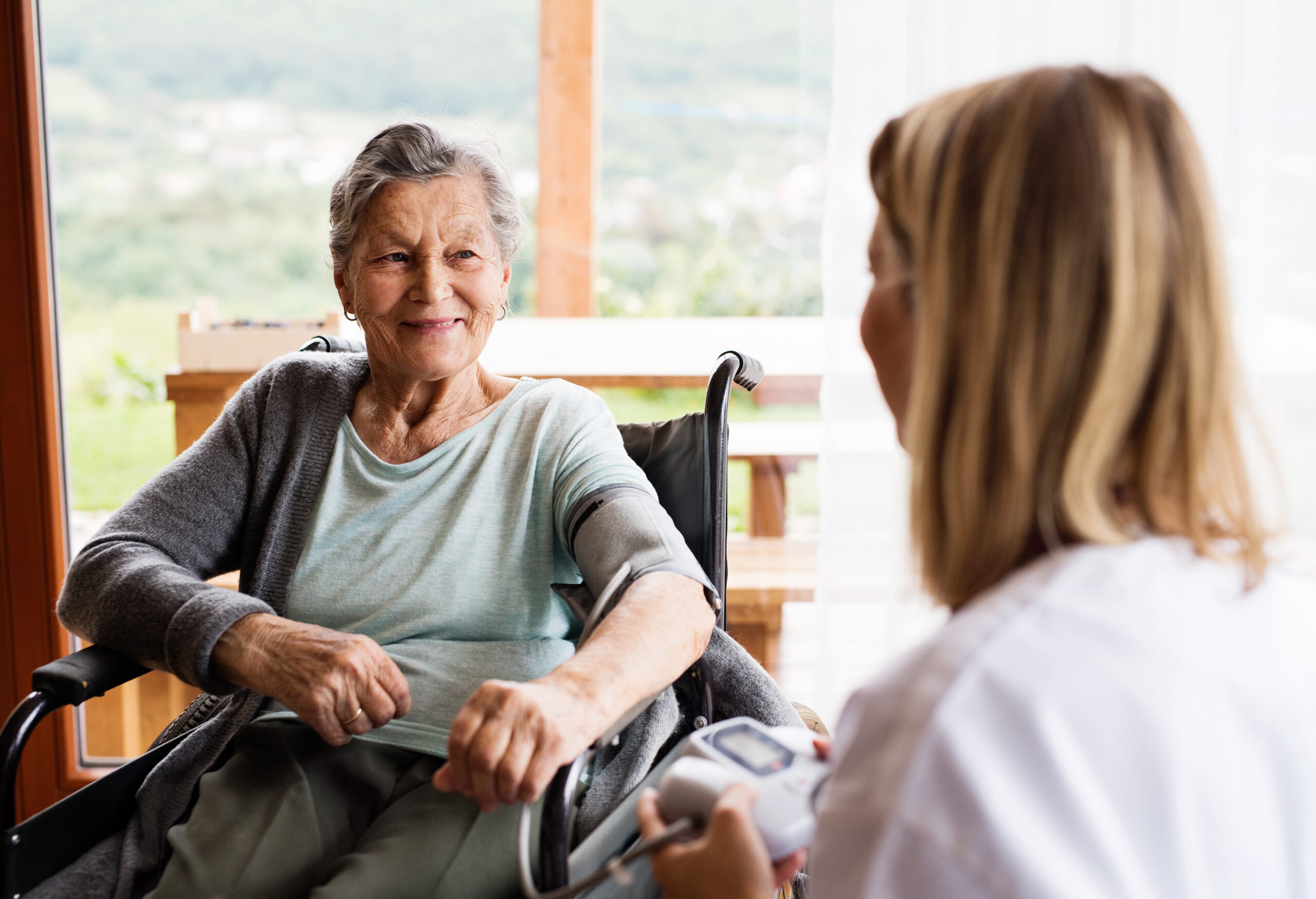
We are essentially providing hospital-level private nursing without the institutional feel. It’s the highest level of medical oversight, delivered in the place where the patient feels most comfortable.
The Family Dynamic: Dignity and Comfort
Empowering the Family Unit
In a rehab center, you are a visitor. You have to follow “hours.” You’re a guest in someone else’s building. When you have 24/7 home health care, you are still the head of the household. You get to be the spouse or the child again, rather than the exhausted caregiver.
Preserving Lifestyle and Privacy
There is a profound sense of dignity in being able to wear your own clothes, eat your own food, and see your grandkids or your dog whenever you want. Stroke recovery is a mental marathon. When a patient feels like a person—not a room number—their motivation to do the hard work of rehab stays much higher.
Making the Preferred Choice for Your Loved One
If you’re feeling pressured to choose a facility, take a breath. You have options. The data shows that for safety, mental health, and the speed of physical recovery, being at home is the gold standard.
Don’t let the critical recovery window slip away in a crowded facility. If you want to see what a customized, in-home plan of care could look like, let’s talk about how we can get your loved one back to where they belong. Ready to take the next step? Fill out our form or call us directly at 646-989-3936.
Medical Disclaimer:
The information provided in this article is for general educational purposes only and is not a substitute for professional medical advice, diagnosis, or treatment. Reliance on any information provided on this website is solely at your own risk. Always consult with a qualified physician or healthcare provider regarding any medical concerns. If you are experiencing a medical emergency, please call 911 or go to the nearest emergency room immediately.