
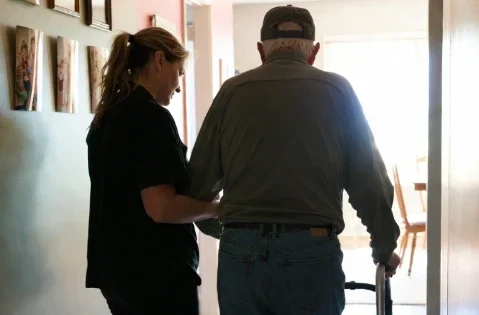
The decision to seek support for an aging loved one or an individual recovering from an illness often begins with a fundamental question: What exactly is home care? For many families, the ideal scenario is to receive assistance while remaining in the comfort and familiarity of their own home. Home care services make this vision a reality, providing essential support that promotes dignity, independence, and overall quality of life.
Home care encompasses a wide range of services delivered directly to a client’s residence. These services are typically categorized as either non-medical (supportive) or medical (skilled). Understanding this distinction is the first critical step in determining the right fit for your family. The primary goal of home care is always to maintain the client’s routines and allow them to age in place safely.
Home Care vs. Home Health Care
- Home Care (Non-Medical/Non-Skilled Care): This category focuses on assistance with Activities of Daily Living (ADLs) and instrumental support. Services include bathing, dressing, grooming, meal preparation, companionship, and light housekeeping. Home care providers can offer medication reminders but cannot administer medication or perform clinical treatments. This support is generally ongoing and often paid for privately.
- Home Health Care (Medical/Skilled Care): This involves medical treatments and therapies that must be ordered by a physician and delivered by licensed clinical professionals. This includes skilled nursing care (e.g., wound care, IV medications, injections), physical therapy (PT), occupational therapy (OT), and speech therapy (ST). Home health care is typically short-term, focusing on recovery or managing a specific health condition, and may be covered by Medicare or private insurance if strict criteria are met.
Is Home Care Right for My Loved One?
Home care services for the elderly are the ideal solution when the primary need is for supportive assistance and companionship rather than continuous, high-level medical intervention. If your loved one needs help with basic daily tasks, feels isolated, or is at risk of falling when completing household chores, non-medical in-home care is generally the appropriate starting point. However, families often combine both types—using home health for clinical needs and professional home care for daily personal support.
The Core Components of In-Home Care
At Alliance Homecare, we believe care should be delivered with profound respect for the client’s history and their right to self-determination. Our services are structured around core components designed to enhance well-being while promoting independence. Whether you are looking for senior care or highly specialized care, our plans are built around the client, not a checklist.
Personal Care: A Focus on Independence
Personal care involves hands-on assistance with essential daily activities, always performed with sensitivity and respect for privacy. This is often the most requested elderly care service, enabling clients to maintain their appearance and self-esteem.
Key services include:
- Bathing and Grooming: Assisting with showering, hair washing, skin care, and dressing.
- Mobility and Transferring: Safely assisting the client with moving between beds, chairs, or restrooms.
- Continence Care: Providing assistance with toileting and maintaining hygiene.
- Meal Preparation and Feeding Assistance: Ensuring nutritious meals are prepared according to dietary restrictions and assisting with eating if necessary.
Companion Care: Addressing Social and Emotional Well-being
Loneliness and social isolation represent significant risks to a senior’s mental and physical health. Companion care is a non-medical service dedicated to fostering meaningful social interactions and emotional support.
The benefits of quality companionship are extensive:
- Combating Isolation: Caregivers engage seniors in conversation and activities, providing a sense of stability and routine.
- Enhancing Cognitive Function: Regular social activity stimulates the brain, which is crucial for maintaining cognitive health and potentially delaying the onset of cognitive decline.
- Providing Respite: Companion care provides essential respite care for family members, offering them peace of mind while ensuring their loved one is safe and engaged.
Specialized Care: Meeting Unique Health Needs
For clients with complex or progressive conditions, generalized care is insufficient. Alliance Homecare excels in providing highly trained specialized care for chronic conditions, ensuring a higher standard of intervention and compassion.
- Alzheimer’s and Dementia Care: Caregivers undergo specific training to manage common challenges, maintain familiar routines, and foster a sense of security and dignity, tailoring the care plan to the specific diagnosis.
- Parkinson’s Care: Specialized support focuses on managing mobility issues, ensuring safety during transfers, and assisting with tasks affected by tremors or rigidity.
High-quality agencies, like Alliance Homecare, also employ meticulous Caregiver-Client Matching, moving beyond just scheduling to ensure a personal connection based on personality, language, and interests. This compatibility builds trust, improves client comfort, and enhances adherence to the care plan, leading to better outcomes.
The Benefits of Professional In-Home Care
When seeking in home caregivers near me, families often face the critical choice between hiring a private individual and engaging a reputable home care agency. While hiring a private individual may appear straightforward, choosing a professional agency is a strategic investment in security, reliability, and guaranteed expertise, offering unparalleled value that outweighs informal support.
Why Professional Care Outweighs Informal Support
A professional agency provides a comprehensive support system and transfers significant risks away from the family:
|
Feature |
Professional Home Care Agency (Alliance Homecare) |
Private Caregiver |
|
Vetting & Recruiting |
Rigorous vetting, and certification verification are guaranteed. |
Must be conducted, managed, and paid for by the family, often less comprehensive. |
|
Legal/Financial Protection |
Agency handles all payroll, state/federal taxes, Social Security, and Workers’ Compensation Insurance. |
The family assumes all employer responsibilities and potential liability for on-the-job injuries. |
|
Continuity of Care |
Agency provides immediate, trained backup caregivers and flexible staffing using advanced scheduling technology, ensuring 24/7 reliability. |
Service is interrupted if the private caregiver is sick or has an emergency. |
|
Clinical Oversight |
Care is supervised and evaluated by a Registered Nurse (RN). |
Oversight and quality control fall entirely on the family. |
A Partnership in Health and Wellness
At Alliance Homecare, our unique perspective is centered on the RN’s role. The clinical supervisor, an experienced Registered Nurse (RN), conducts the initial assessment and develops the customized plan of care in collaboration with the client’s physician. This RN oversight is a crucial quality checkpoint that ensures:
- The care plan is clinically sound and aligned with medical orders.
- The home health aides are supervised, evaluated, and strictly adhering to safety protocols.
- Changes in the client’s condition are noticed and reported promptly to the medical team.
The Role of the Care Team
We understand that caregiver agency turnover affects quality. Our commitment to meticulous matching—based on personality, interests, and specialized skills—improves job satisfaction for our staff, which translates directly to greater trust, stability, and better patient outcomes for your loved one.
Home Care vs. Nursing Home: Which is the Best Option for You?
Choosing the right long-term care setting is one of the most significant decisions a family can make. The fundamental difference lies in the level of medical supervision required.
The Distinctive Advantages of Home Care
Home care is superior for promoting client autonomy and emotional well-being.
- Familiarity and Comfort: The client remains in their cherished home environment, surrounded by personal belongings and memories.
- Flexibility and Customization: Home care allows the individual to maintain their own schedule and routines, rather than adhering to the rigid time structure of a facility. You only pay for the specific care hours you need, which can be significantly more cost-effective than 24/7 institutionalized care for many clients.
- One-on-One Focus: The in home caregiver’s attention is dedicated entirely to the client, facilitating a customized approach tailored to their specific needs and preferences.
The Path to Getting Started: Your In-Home Care Consultation
We understand that starting the search for home care can feel overwhelming. Alliance Homecare views the initial engagement not as a sales process, but as a home care consultation—a collaborative, no-pressure conversation focused entirely on understanding and solving your loved one’s unique challenges.
What to Expect During the Initial Consultation
Our process is built on a consultative approach: Ask, Listen, Qualify, and Customize.
- Initial Inquiry: Our Senior Care Coordinator listens to your immediate and long-term concerns. We ask open-ended questions like, “What is your biggest care concern for your loved one?” and “What is the care recipient’s day-to-day routine?”.
- RN Assessment: A Registered Nurse performs a comprehensive in-home assessment. This holistic evaluation covers health needs, mobility challenges, safety considerations, and the client’s personal preferences.
- Collaborative Planning: We present a draft personalized care plan that outlines proposed services, schedules, and goals, ensuring it aligns perfectly with the client’s lifestyle and dignity.
Questions to Ask Your Potential Provider
When choosing a home care agency, transparency is key. We encourage families to be diligent in their vetting. Here are essential questions to ask home care providers during the consultation:
- “Does a Registered Nurse develop and supervise the care plan?”
- “”What is your procedure for providing a substitute caregiver if the primary caregiver is sick?”
- “How are your caregivers trained, especially for specialized conditions like dementia?”
- “Does the agency handle all payroll and tax obligations?”
The First Steps to a Personalized Care Plan
The outcome of the consultation is a clear, actionable path forward. The personalized care plan ensures that all aspects of the client’s needs—from physical assistance and emotional wellness to medication reminders and household tasks—are addressed consistently and professionally.
Exploring Your Options and Finalizing Your Personalized Plan
The scope of home care is never one-size-fits-all. The necessary services are highly dependent on geographic location and the complexity of the individual’s care requirements. While professional agencies provide essential services like advanced vetting, guaranteed backup, and RN supervision, the final plan must reflect a balance of needs and resources. A customized care plan, determined after a professional assessment, ensures that the services provided are both necessary and effective. At Alliance Homecare, we prioritize delivering exceptional value and quality that align with your family’s long-term well-being.
The Personalized Care Plan
At Alliance Homecare, we make this final step simple and risk-free. Our expertise and commitment to quality ensure that the value you receive far exceeds the support you expect.
Ready to Discuss a Safe, Personalized Care Solution?
Don’t navigate the complexity of home care alone. Take the next step toward security and peace of mind for your loved one.
** Click Here to Request Your FREE, No-Obligation RN-Led Consultation & Personalized Plan Today**
OR, Call us at 646-989-3936
Medical Disclaimer:
The information provided in this article is for general educational purposes only and is not a substitute for professional medical advice, diagnosis, or treatment. Reliance on any information provided on this website is solely at your own risk. Always consult with a qualified physician or healthcare provider regarding any medical concerns. If you are experiencing a medical emergency, please call 911 or go to the nearest emergency room immediately.